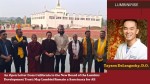
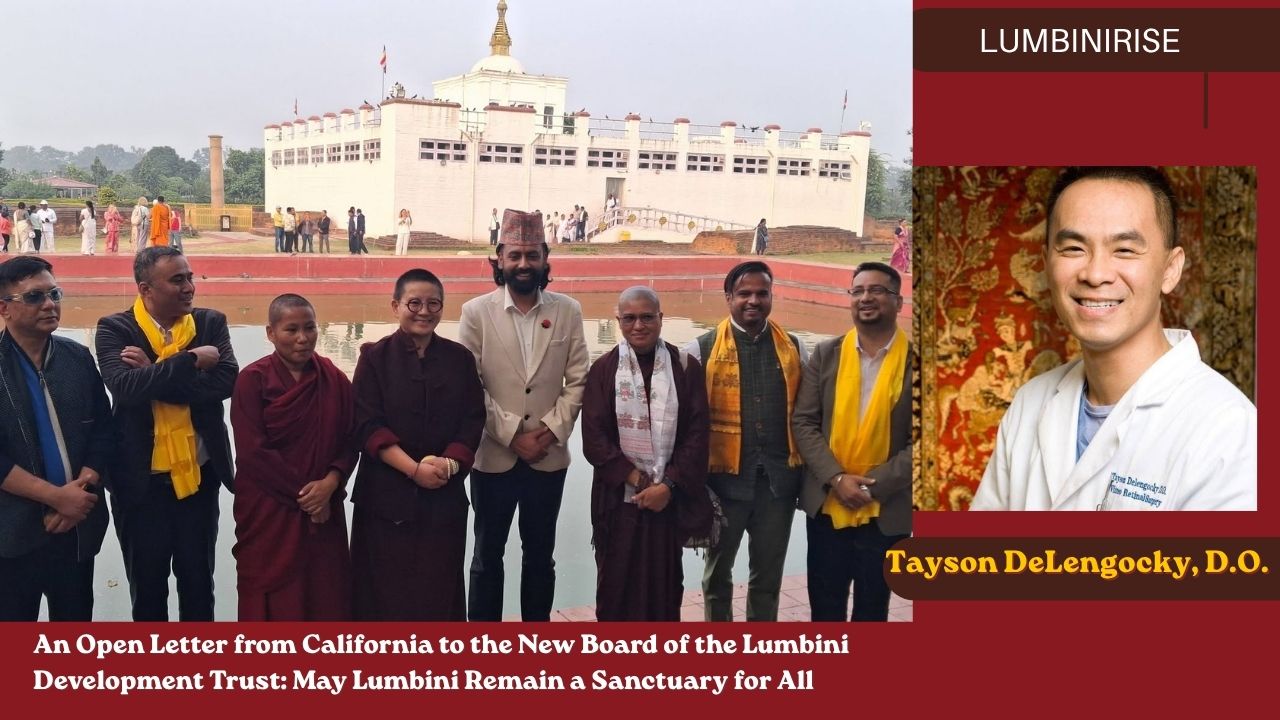
Tayson DeLengocky, D.O
Dear Hon. Minister Paudel, dear Ani Choying Drolma, dear Er. Santosh Pandey, and dear members of the Lumbini Development Trust,
From California, I extend my heartfelt congratulations to the new leadership of the Lumbini Development Trust (लुम्बिनी विकास कोष, LDT) as you begin your responsibilities at the sacred birthplace of Lord Buddha. Nepal’s government named Ani Choying Drolma (आनी छोइङ डोल्मा) vice-chairperson of the Trust on October 16, 2026, and many of us far from Nepal have been glad to hear it. She and Er. Santosh Pandey (सन्तोष पाण्डे), the new member-secretary, took office together on November 18, completing the Trust’s executive committee. My respectful good wishes also go to Hon. Minister Khadka Raj Paudel (खडकराज पौडेल), known to readers as the writer Ganess Paudel, who chairs the Trust’s council on behalf of the Ministry of Culture, Tourism and Civil Aviation (संस्कृति, पर्यटन तथा नागरिक उड्डयन मन्त्रालय), and to every member of the board. I wish you all wisdom and every success in the work of preserving and promoting Lumbini.
A Voice I First Heard in Los Angeles
Ani-la, for many years your angelic voice has touched countless hearts and souls across cultures and borders. Through your chants and melodies, you have brought comfort and a deeper appreciation of the Dharma to listeners around the world. Your dedication to education, humanitarian service and the welfare of Buddhist nuns has made a lasting difference in the lives of others.
I heard that voice in person in 2014, when I attended your concert in Los Angeles. Twelve years later, the singer from that evening has been entrusted with the place where the Buddha was born.
You are an icon of Buddhist music worldwide, and I believe you can take Lumbini to the next level. Wherever you sing, audiences who know little of Nepal will hear about the birthplace from someone they already love and trust, and many of them will want to see it for themselves.
A New Chapter at the Birthplace
Today your journey enters a different chapter, one that carries great responsibility and a remarkable opportunity. The vice-chair’s term runs for five years, and the vice-chair also serves as the Trust’s chief administrative officer. The Trust has cared for Lumbini since 1985 and still works from a master plan drawn up in 1978.
The new board arrives at a demanding moment. A UNESCO and ICOMOS monitoring mission inspected Lumbini in February 2026, and for the third year in a row the site has stayed off the World Heritage danger list because of corrective measures. The Sacred Garden is also full of living practice. This autumn, Nepal’s novice nuns held the eighth World Peace Monlam Prayer with one hundred participants, and the Thousand Buddha Temple hosted a week-long Pranidhana ceremony. The Trust expects arrivals to grow by about 12 percent this year.
Lumbini is a historical monument and a destination for pilgrims, and it is also a sacred landscape that belongs to the spiritual heritage of humanity. Here, more than 2,500 years ago, Siddhārtha Gautama was born, beginning a life that would illuminate the path toward liberation from suffering. For Buddhists across traditions and nations, Lumbini is a shared inheritance whose meaning reaches past institutions, national identities and differences in practice.
A Sanctuary for Every Sincere Practitioner
As a Buddhist practitioner in California who holds Lumbini close to my heart, I hope the new leadership will strengthen its role as a sanctuary of peace, compassion and religious freedom.
The Buddha’s teachings have inspired many forms of practice. Some devotees express their faith through scholarship, charitable service and the care of sacred institutions. Others choose a quieter path of meditation, solitude and renunciation. These ways of practice need not compete. Each recalls a different side of the Dharma.
As the new leadership begins its work, I respectfully invite you to look closely at something that has been unfolding in Lumbini for more than a year: the presence of the Vietnamese Dhutaṅga Yogi Thích Minh Tuệ and the companions who walk with him.
Since 2018, Thích Minh Tuệ has walked in peace and for peace, keeping the ancient Buddhist austerities without seeking recognition, material gain or publicity. His barefoot international pilgrimage began on December 12, 2024, and took him through Laos, Thailand, Malaysia, Indonesia, Singapore, Sri Lanka and India before he arrived in Nepal on September 25, 2025. Nepal has become the longest sanctuary of his journey. His only bowl is the inner pot of a rice cooker. He eats once a day from alms and sleeps sitting up.
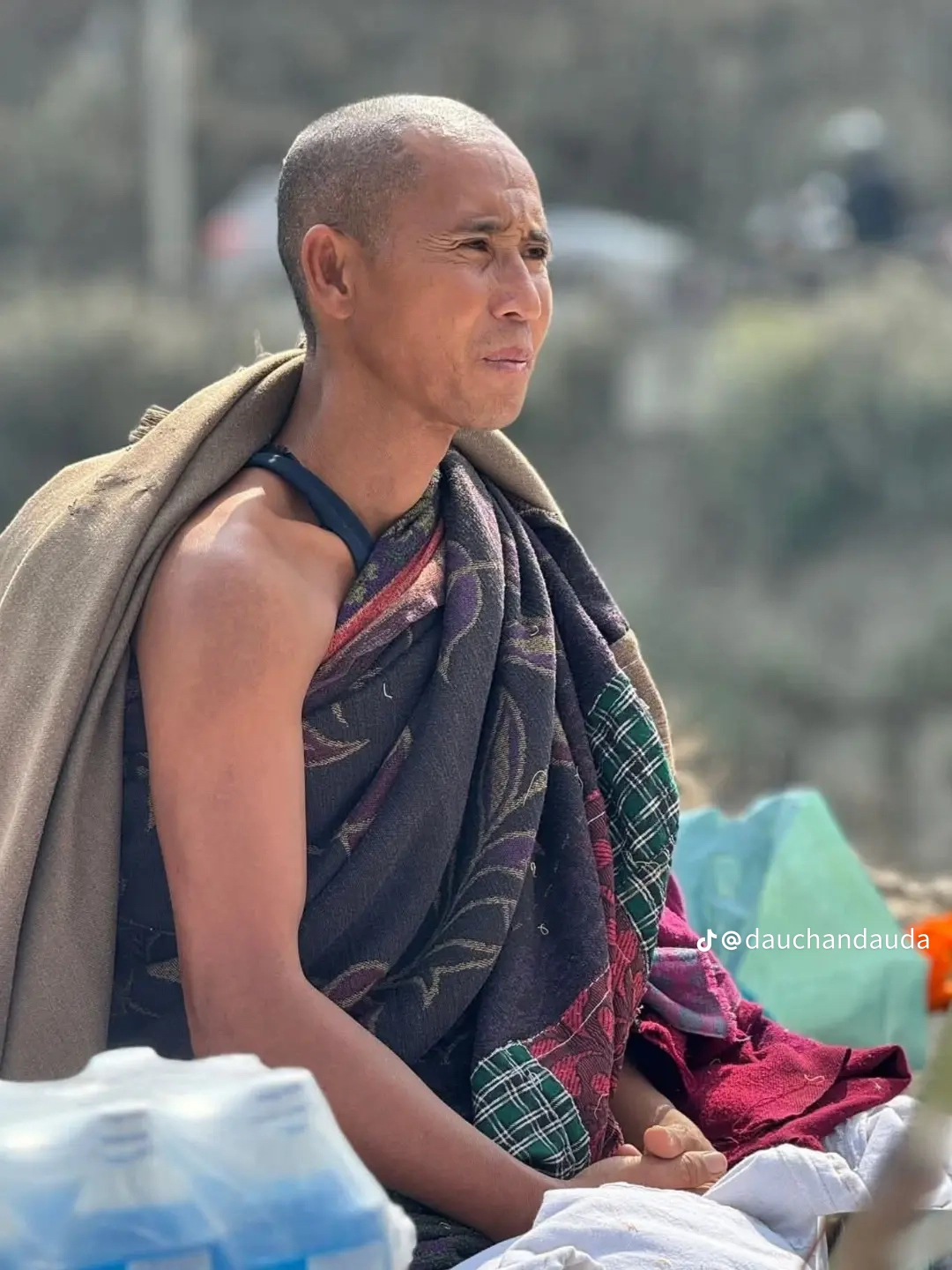
He seeks no institutional authority and no worldly recognition. He has declined the role of teacher, and he makes decisions together with his companions. When supporters offered to help him travel to the United States and Australia, he chose not to apply for visas unless his companions could come too. In a January 2026 interview with Craig Lewis of Buddhistdoor Global, he explained why he walks: “When I walk, I have no expectation of help from anyone.”
His pilgrimage has drawn international attention, and it has inspired visitors from Vietnam and from Vietnamese communities worldwide to travel to Nepal. My hope is that Lumbini will continue to welcome practitioners such as him, alongside monks, nuns, scholars, pilgrims and lay devotees from every Buddhist tradition. A sacred place grows more meaningful when its doors stay open to those who sincerely seek the Dharma, whatever their nationality, affiliation or manner of practice.
Gratitude From Vietnamese Around the World
Vietnamese people all over the world are deeply grateful to Nepal, to its authorities and especially to the people of Lumbini for the hospitality, kindness and respect they have shown Dhutaṅga Yogi Thích Minh Tuệ and his companions. Nepal has offered him something profoundly meaningful: the freedom for a peaceful spiritual practitioner to walk, practice and live in peace.
Two Walks, One Birthplace
In June, Lumbini welcomed the Walk for Peace led by Bhikkhu Paññākāra at the end of its 108-day barefoot march across the United States. The monks walked from the Eternal Peace Flame to the Mayadevi Temple and offered prayers there. It was a fitting welcome for an organized pilgrimage.
Thích Minh Tuệ’s own walk for peace had no organization behind it, and he made it at the risk of his life. On March 4, 2025, at the Myanmar frontier near Mae Sot, the group was warned that crossing could cost them their lives. His answer was: “Going into a place of war, we might die; we might bring peace.”
In May, the California Legislature adopted ACR 141, a Vesak resolution whose preamble names Thích Minh Tuệ and also recognizes the Walk for Peace. California has honored both walks in the same document. Lumbini now holds both in the same garden.
Leadership Guided by Compassion
The kindness and compassion in Ani-la’s music have already reached people across the world. May those same qualities guide the whole board in its new responsibilities.
Caring for Lumbini asks for more than physical development. It asks for protection of the garden’s spiritual atmosphere, respect for its many Buddhist communities, transparent administration, and sensitivity toward those who come seeking peace and need little in the way of comfort. The wandering yogis ask for very little, mostly quiet and the freedom to step away from crowds and cameras. Their presence also gives pilgrims a reason to stay longer at the birthplace, and longer stays matter to the villages around the Sacred Garden.
Preserving Lumbini’s heritage and welcoming living practitioners belong together. The new leadership can show that a sacred Buddhist destination is able to embrace modern development while keeping the timeless values of simplicity and loving-kindness.
A Wish From California
As the new board begins this chapter, I offer my sincere wishes for wisdom and patience in the work ahead, and I hope the new leadership will keep Lumbini a welcoming sanctuary for peaceful practitioners and pilgrims from all nations.
May Lumbini remain a place where differences among Buddhist traditions are met with mutual respect, where wandering yogis can practice in peace, and where pilgrims from every nation meet the compassion at the heart of the Buddha’s teachings. May the Dharma flourish in Lumbini, and may the board’s service bring lasting benefit to all who visit this sacred land.
May Lumbini be remembered for the Buddha who was born there, and also for the freedom it offers those who sincerely seek to walk in his footsteps.
May all be happy. May all be well. May all live in peace.
With sincere congratulations, respect and warm wishes from California, USA
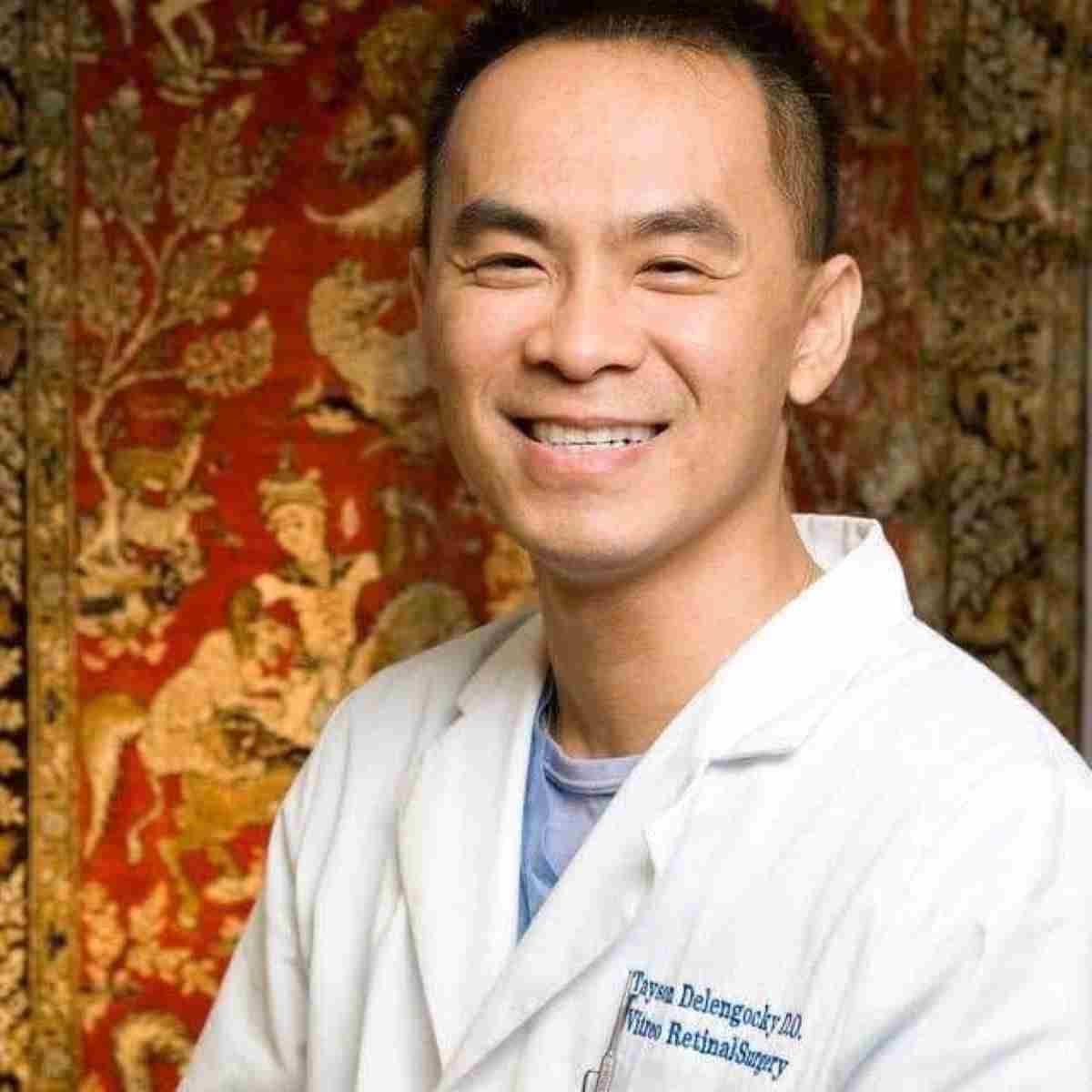
Tayson DeLengocky, D.O., is a board-certified ophthalmologist in California specializing in vitreo-retinal diseases and surgery and neuro-ophthalmology, and a Vietnamese-American lay Buddhist. He is a contributing writer for Buddhistdoor Global, has written for The Rising Nepal, The Nepal Weekly and NepYork, and has published a series of 31 analytical studies of the Thích Minh Tuệ phenomenon on SSRN.